
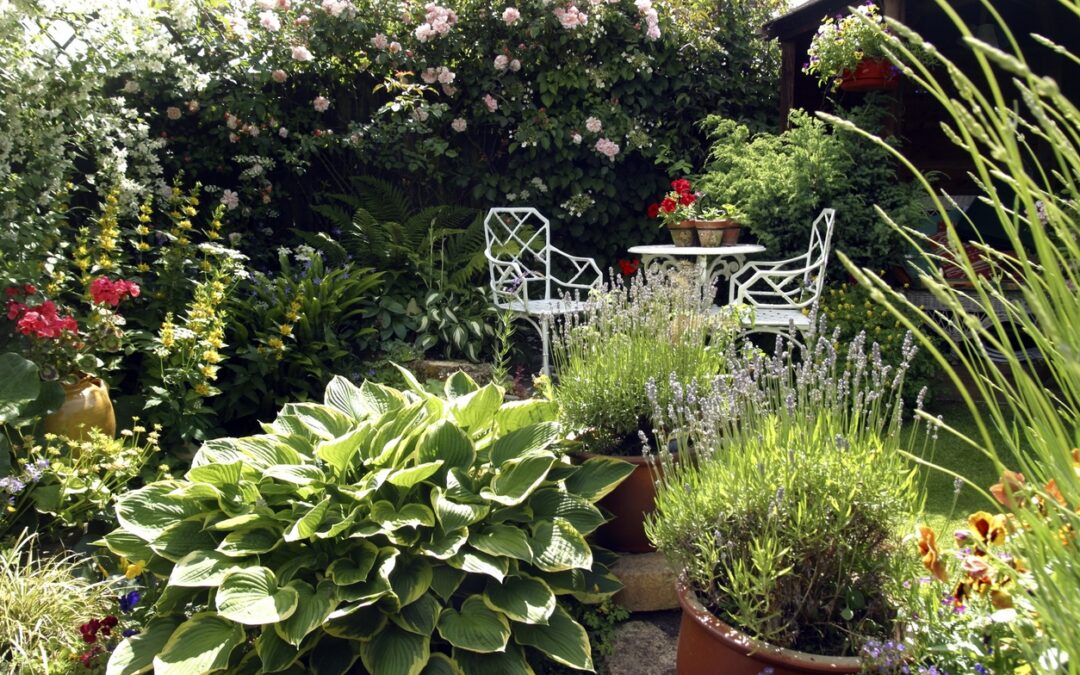
Limitations foster creativity, and this hold true for your garden. With increased urbanisation and more people choosing townhouses and city apartments over the classic single family home, more and more of us are working with courtyards, narrow backyards, and smaller outdoor spaces. But having a smaller space doesn’t mean sacrificing your dream garden. With thoughtful planning and a little creativity, you can create a garden that is beautiful, functional, and easy to maintain.
Think about function first
Before choosing plants, it’s important to consider what you want to achieve with your garden. Do you love entertaining guests, or are you wanting a quiet place to retreat with a cup of coffee? Are you a home cook who wants to load up on herb and veggie patches, or are flower beds more your style? In a compact garden, you don’t have the luxury of loading up the space with every decoration at the local hardware store, so make sure every element you choose to include serves a clear purpose. One of the advantages of having a small garden is that it’s much quicker to fill out, so you can afford to spend a little more time planning things out.
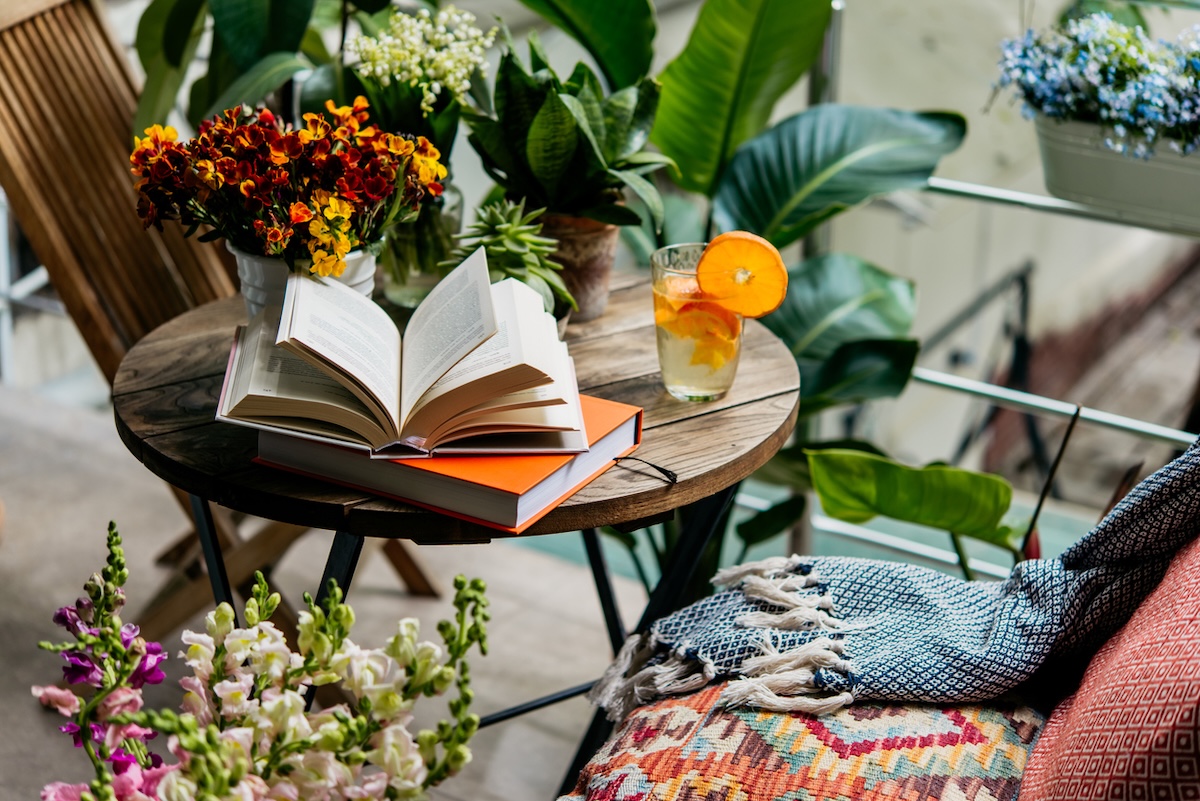
How to maximise space in a compact garden
Here’s a few tricks you can use to make the most out of your space:
Utilise verticality
Vertical planting is one of the simplest ways to add greenery without taking up valuable floor area. Climbers on a trellis, wall-mounted planters, hanging baskets and slim screening can all help a small garden feel more layered and immersive. They also draw the eye upward, which makes the whole space feel less confined.
This can be particularly effective in urban gardens where fences and walls are already a strong visual feature. Rather than letting those boundaries feel harsh or enclosing, you can soften them with planting and turn them into part of the design.
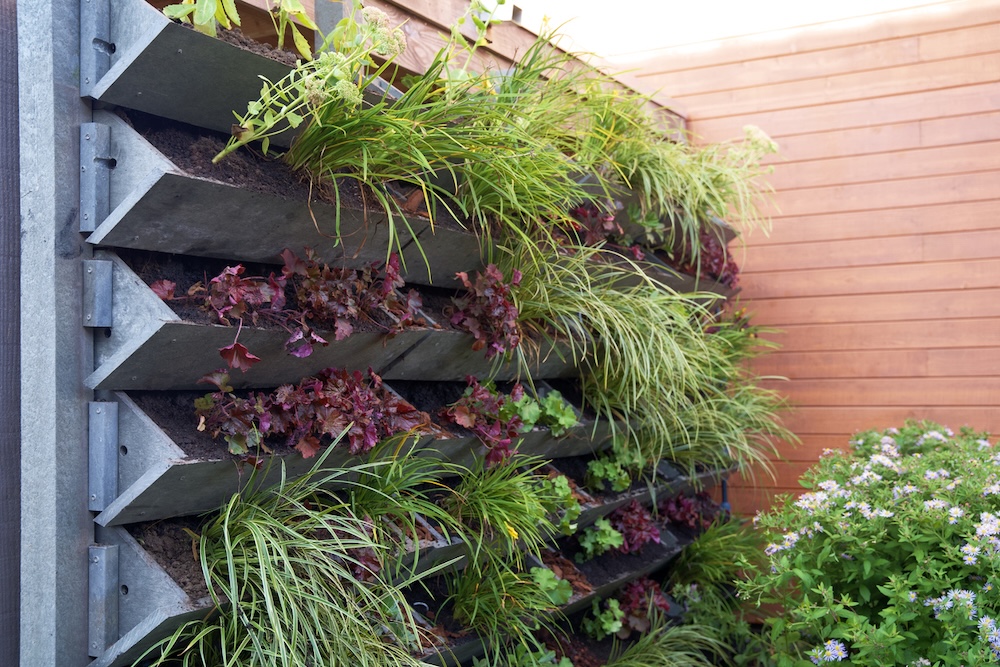
Vertical planters can be a great space-saver in a smaller garden
Be selective with plants
Plant choice matters in any garden, but it matters even more in a compact one. A plant that looks innocent in a nursery pot can quickly dominate a small space if it is not suited to the scale of the garden.
It usually makes sense to focus on compact or well-behaved plants, and to pay close attention to mature size before planting. And, as with our previous tip, utilising plants that grow upward rather than outward (such as climbers or many variations of lilly-pilly) can be a great way to add scale without taking up too much floor space.
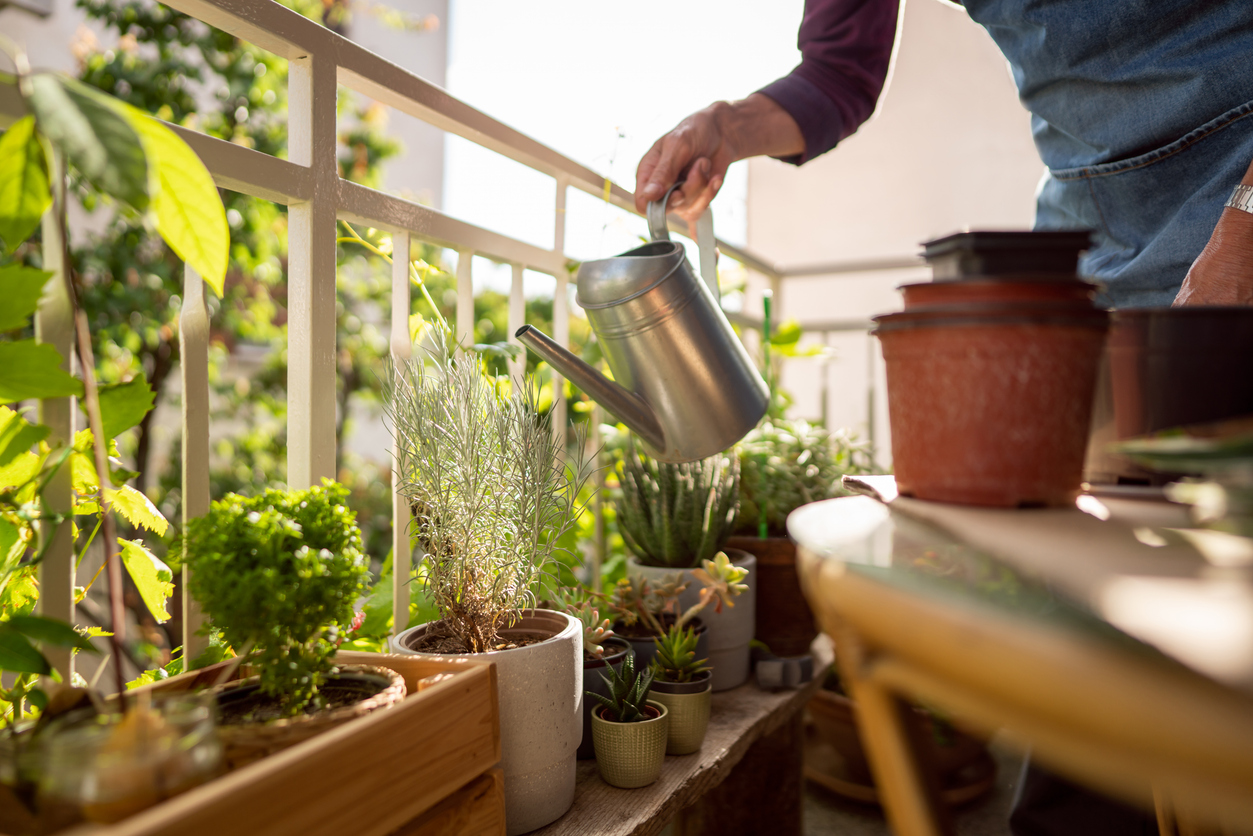
Look for compact plants or potted plants that will fit easily in your space
Look for compact, multi-purpose furniture
Choosing furniture that doesn’t take up too much room, or can be re-configured in some way, is one of the most effective ways to make the most out of a compact garden. Outdoor benches with built-in storage, or foldable tables and chairs that can easily be packed away are both great options.
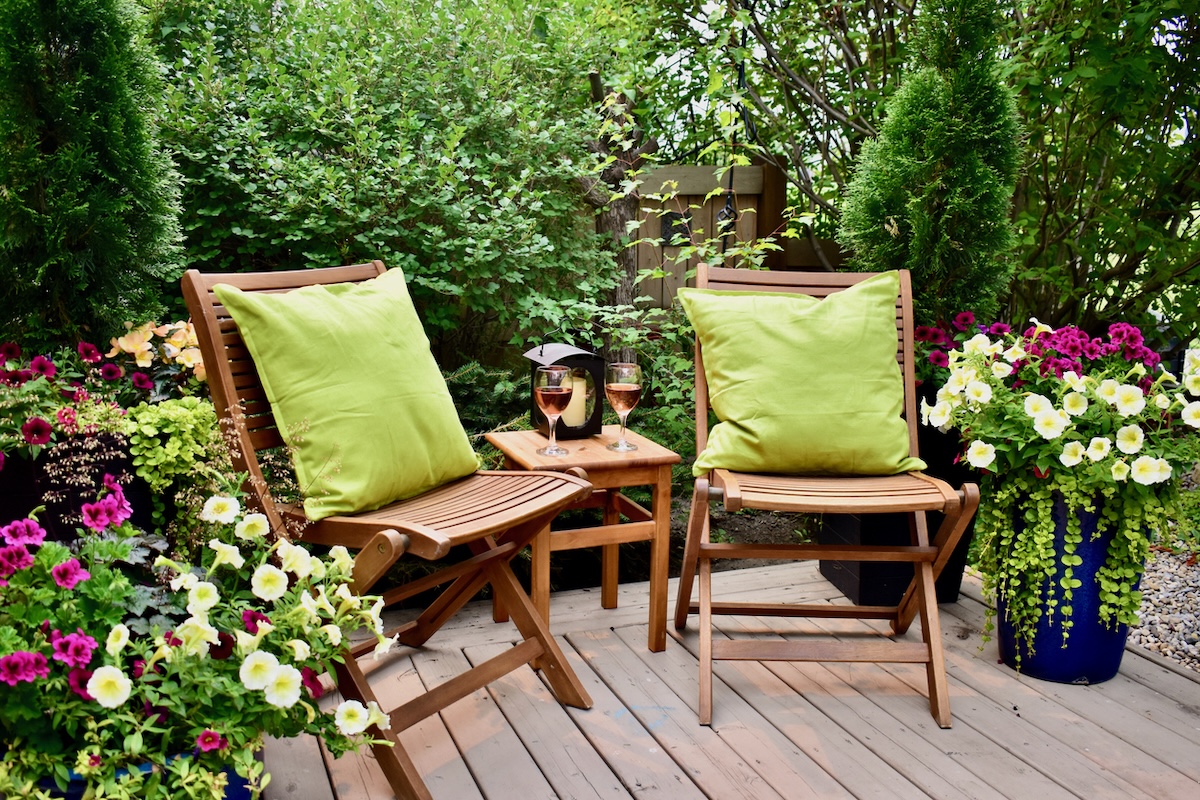
Small tables and folding chairs can be a great solution for smaller gardens that want to maximise space
Designate clear areas of your garden
One of the downsides of smaller spaces is that things can tend to feel messy very quickly. Keeping your compact garden organised with clearly defined areas can make the entire space feel more organised and easier to use.
You can create this sense of separation in a number of ways. Utilising contrasting materials works well, such as moving from paving to gravel, or using an outdoor rug to designate a seating area. Using a garden edging like EverEdge is another great way to keep things organised, and create that clear separation, making your compact garden feel more tidy.
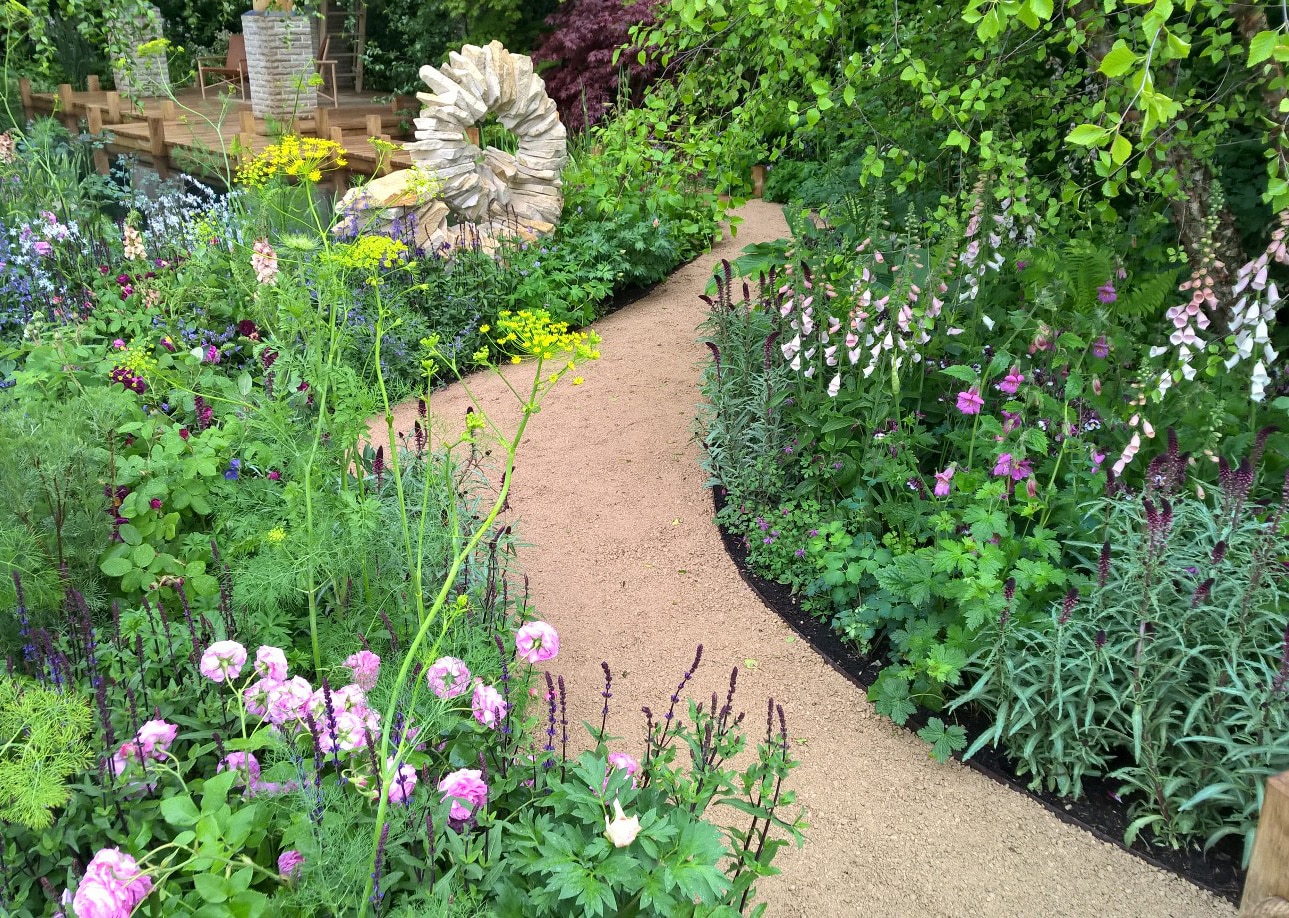
EverEdge can help create separation in your garden, keeping things feeling organised even in a small space.
Designing a small garden is less about limitation and more about making smart use of what you have. By focusing on layout, choosing the right plants and creating clear, defined areas, you can turn even the most compact space into something that feels organised and inviting.