
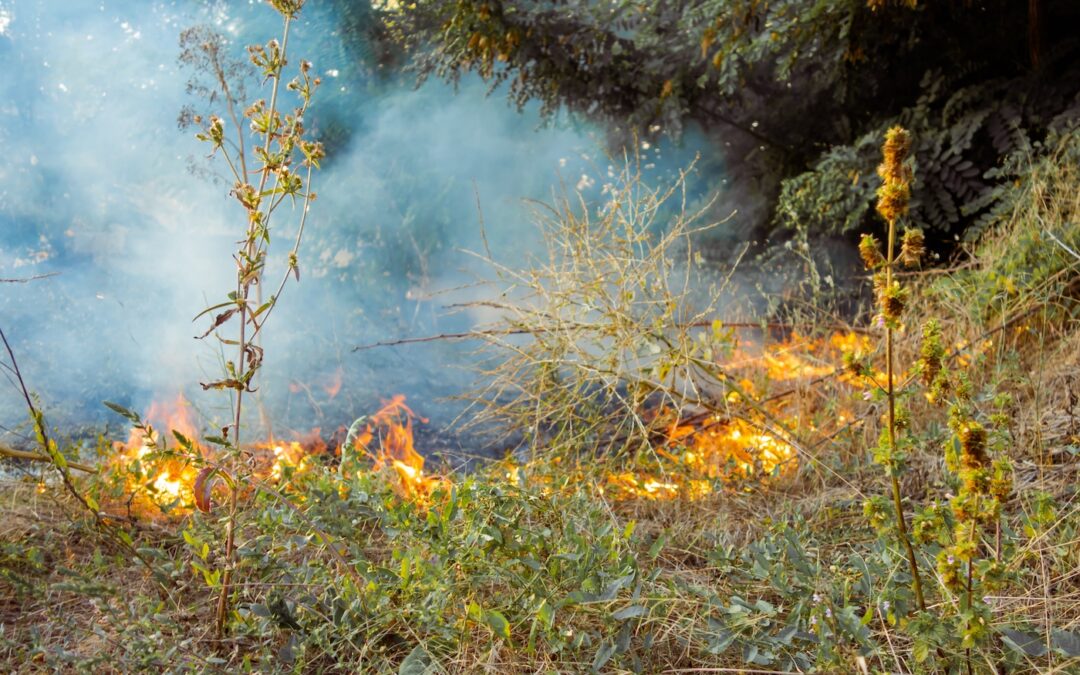
Creating a fire-conscious garden doesn’t mean sacrificing beauty or functionality. With careful planning and smart landscaping choices, your garden can help slow the spread of fire, reduce flammable materials, and support a more resilient property design.
Disclaimer – This article offers only general advice on fire-resistant gardening. It does not offer protection against a major bushfire. In high-risk conditions, always follow your local fire authority’s advice, and leave early in the event of a major bushfire warning.
What is Fire Resistant Gardening?
Fire-resistant gardening involves designing and maintaining your outdoor space in a way that helps reduce the risk of fire spreading across your property. This includes selecting plants with lower flammability, reducing fuel loads like dry leaves and overgrown shrubs, using materials that do not easily catch fire, and creating safe, defensible zones to hinder fire spreading.
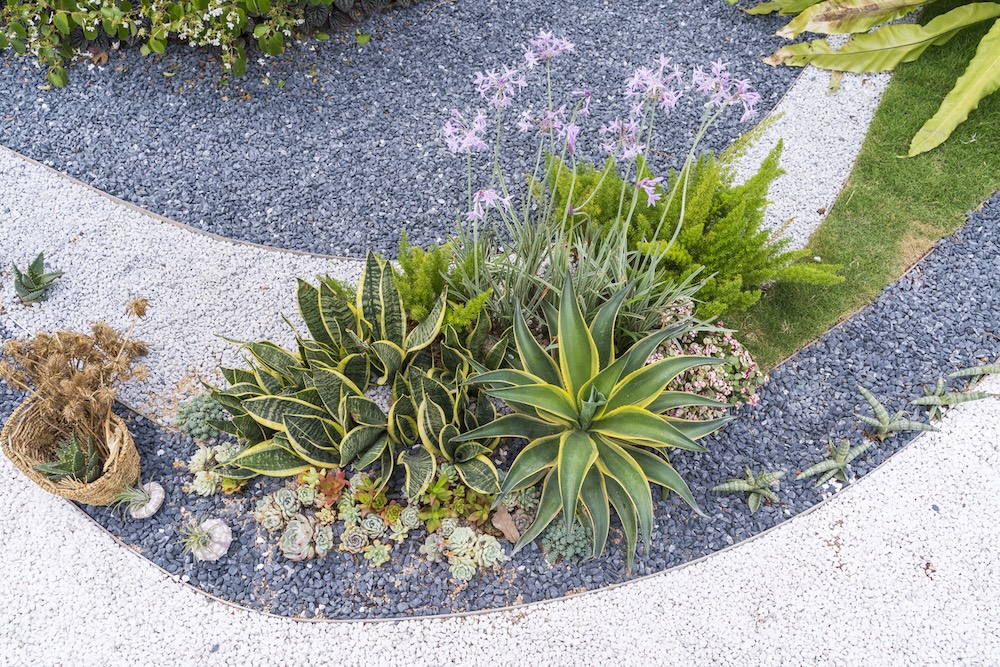
Some fire-resistant gardening techniques – creating buffer zones, using non-flammable materials like stone, and utilising fire-resistant plants.
What Makes a Plant Fire Resistant?
Let’s get this out of the way first; no plant is truly fire-proof. All organic material has the potential to ignite in a large-scale fire given enough heat. However, there are some characteristics which make certain plants either less susceptible to extensive fire damage, or allow them to recover faster after a fire event. These include:
High Moisture Content
Naturally, any plant that is able to hold and retain large amounts of water will be much harder to burn. Various species of succulents and cacti can hold a significant volume of water in their leaves, which helps them survive in hot, arid climates, and makes them the go-to for creating a fire-resistant garden. Aloe Vera, Sempervivum, and Echeveria are all popular choices that can look stunning in any garden. If you’re after native options, Pigface and Ruby Saltbush are among some of the easiest succulents to grow, and are personal favourites of ours.
Of course, regularly watering any plant will also increase its moisture level and make it more fire resistant, so make sure the rest of your garden has plenty to drink, especially in those hot Australian summers.
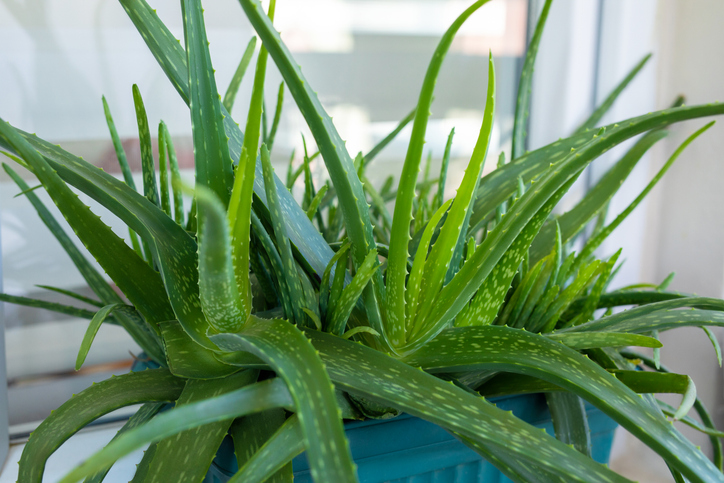
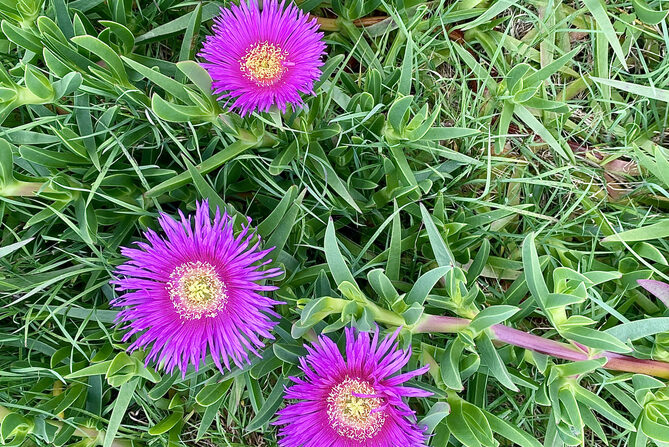
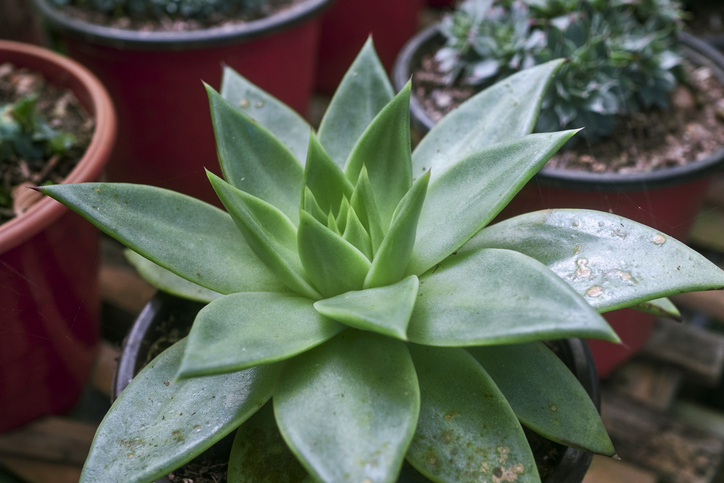
Pictured: Aloe Vera, Pigface, and Echeveria are all plants with excellent water retention, giving them natural fire tolerance.
Low Oil or Resin Content
There’s no surefire way to tell if a plant has high oil or resin content without knowing the species, but there are a few signs to look out for:
- Aromatic leaves or stems: If crushing the leaves releases a strong scent (think eucalyptus, tea tree, or citrus leaves), the plant likely contains volatile oils.
- Sticky or glossy surfaces: Leaves that feel tacky, sticky, or appear shiny may have a waxy or resinous coating, which can be highly flammable.
- Fine, needle-like foliage: Plants with small, thin leaves (like conifers or she-oaks) often produce oils and have more surface area for heat to catch.
- Visible oil glands: Some species, especially in the Myrtle family, have tiny dots or oil glands visible when holding a leaf up to the light.
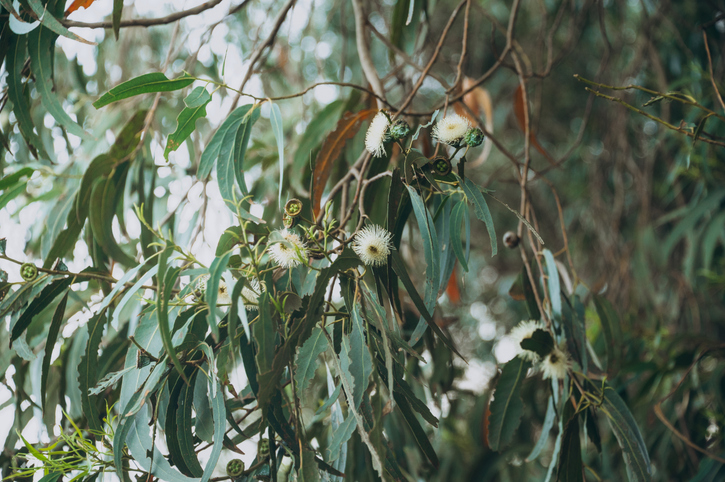
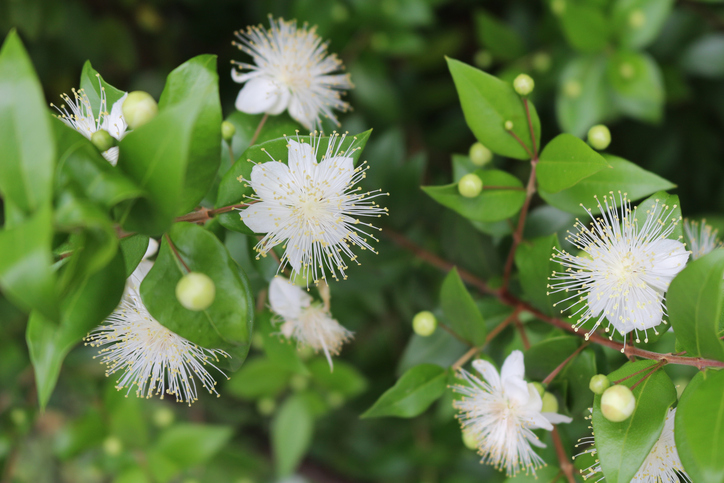
Highly aromatic plants (e.g. Eucalyptus) or plants with glossy/waxy leaves (e.g. Myrtle) are some common characteristics of flammable plants with high oil content.
High Salt Levels
Some plants store salt within their leaves and stems, which can help slow combustion and reduce flammability. The salt acts as a natural flame suppressant by increasing the plant’s moisture retention and lowering the temperature at which plant material burns.
In Australia, many salt-tolerant or coastal native plants fall into this category, most notably, saltbushes like the Old Man Saltbush and Spiny Saltbush. As the name suggests, these species have adapted to survive in sandy, saline soils and exposed conditions, often developing thick, fleshy, or salt-crystal-coated leaves that are harder to ignite.
Australian Natives
Many Australian natives have evolved to become more fire resistant, in order to survive the harsh climate. Some species have developed features like thick, moisture-rich leaves like those in the succulent family, while some, like the Lightwood Wattle, have developed loose, well-spaced leaves and branches which increases airflow and makes it harder for fire to move quickly through the plant.
An important note here; just because a plant is an Australian native, does not mean it’s inherently fire-resistant. In fact, many of Australia’s most iconic trees, such as Eucalyptus, Paperbarks, Grevilleas, and Bottlebrushes are extremely susceptible to fire, and are far more likely to spread flames across your garden. If in doubt, it’s always best to research the species, or if you don’t know the exact species, check out this interactive plant selection guide from the CFA.
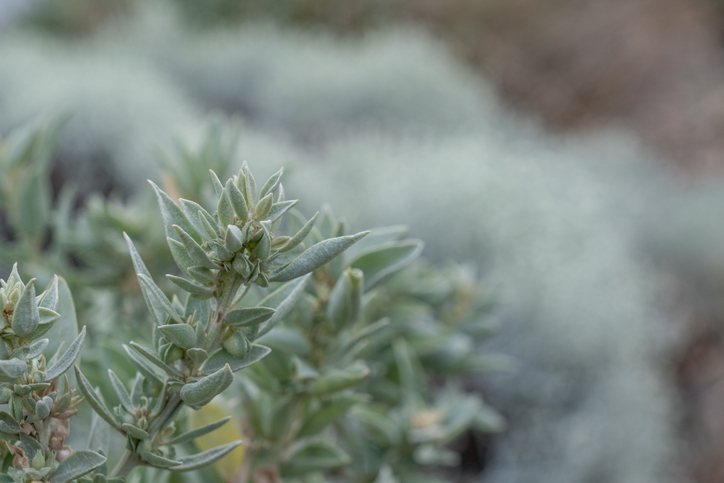
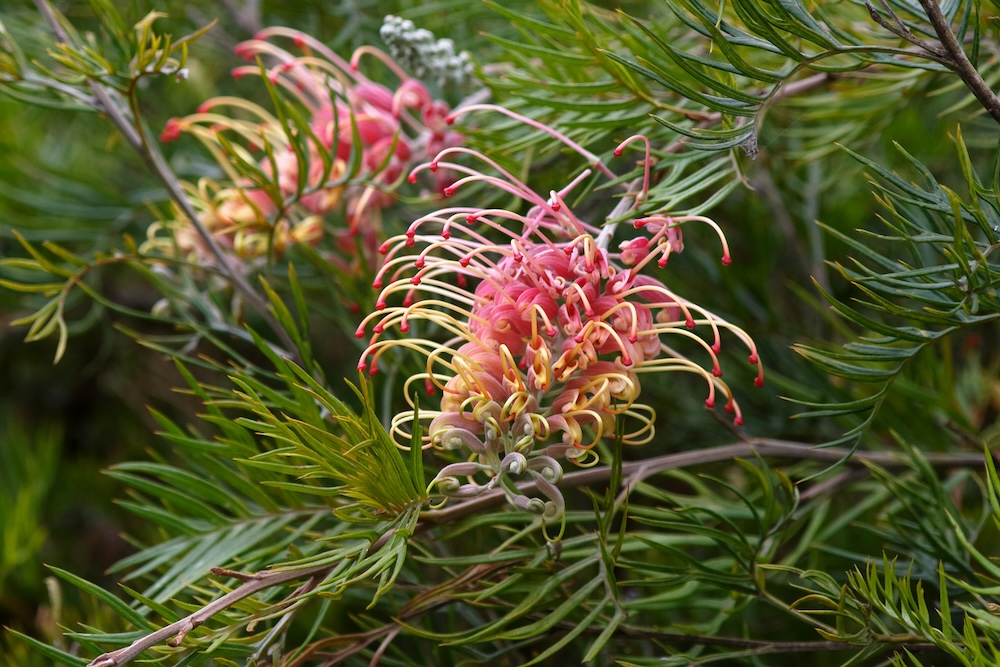
Being an Australian Native does not automatically mean fire-resistance; while some natives like the Grey Saltbush tolerate fire quite well, others like Grevilleas are extremely susceptible and may worsen the spread of fire.
Defensible Zones
One of the most effective ways to reduce the risk of fire spreading through your garden is to create physical separation between your home and potential fuel sources. Land that uses this kind of separation is referred to as a defensible zone or defendable space, and can reduce the effects of radiant heat and flame contact.
How to Create a Defensible Zone
The first step to creating a defensible zone in your home garden is to create your buffer zones. In the immediate area around your home, place a ring of non-flammable material, such as decorative paving, a concrete slab, or a gravel path lined with Everedge. This ring serves as your garden’s last line of defence in a fire, and using these kinds of non-flammable materials, particularly around vulnerable areas like windows and doors, will make it harder for flames to cross.
In the area around this inner ring, ensure any vegetation is maintained to reduce the amount of fuel that a fire can use. Keep lawns short with regular mowing, remove any leaf litter or debris, and space out plants where possible to create larger zones of separation. It’s also a good idea to identify and manage any areas with direct fuel paths where fire will have an easier time of spreading, such as tall trees overhanging the roof.
Around the outside of your garden, ensure vegetation is well-maintained. Tree canopies should ideally not form one continuous cover, and branches should be pruned 2 metres above the ground to prevent fire climbing to the canopy. Landscaping features such as ponds, low stone walls or additional garden paths are optional, but may also help to slow the spread of fire.
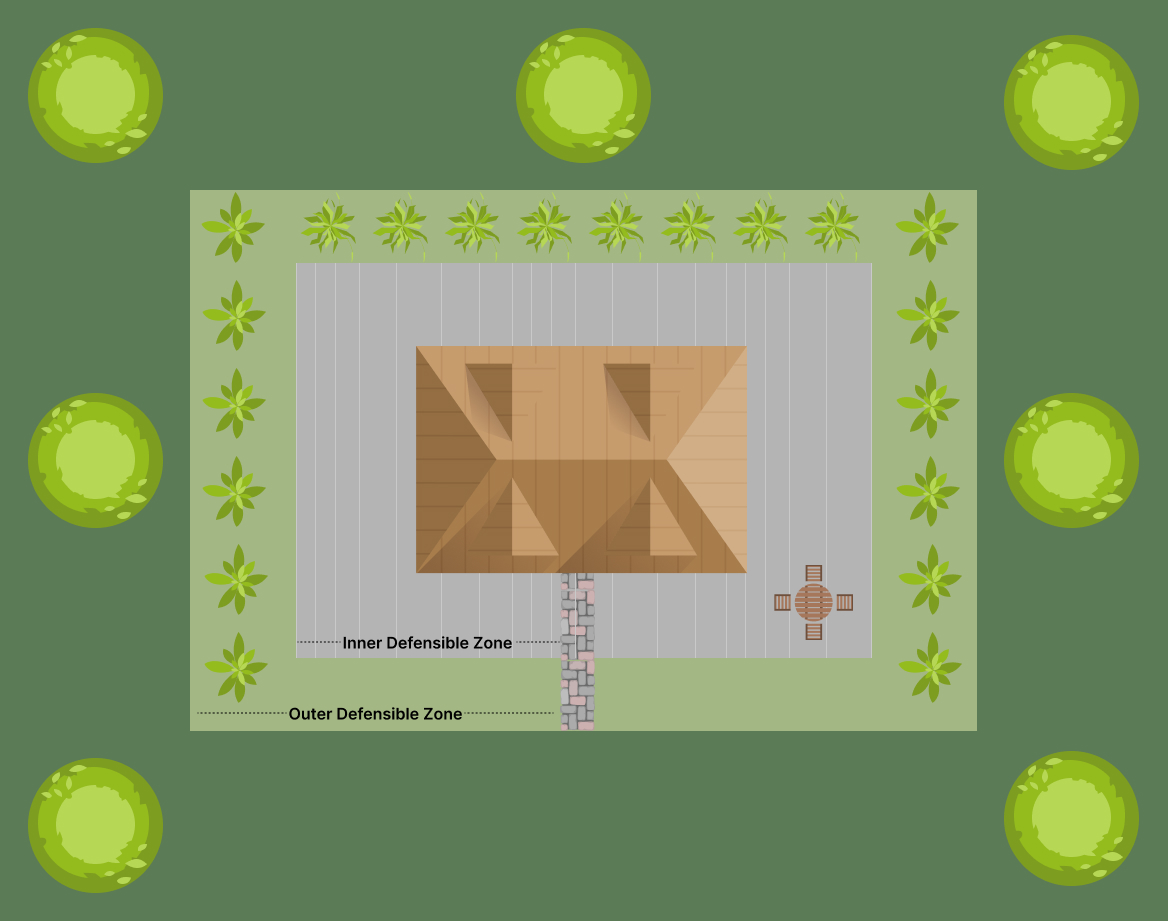
A typical home layout using defensible zones to create space between flammable materials.
Irrigation, Sprinkler Systems & Water Features
Keeping your garden well-watered is one of the simplest and most effective ways to reduce fire risk. Moist, hydrated plants are harder to ignite, and well-irrigated soil helps slow the spread of surface fire. In dry Australian summers, regular watering not only keeps plants healthy, but also increases their natural fire resistance.
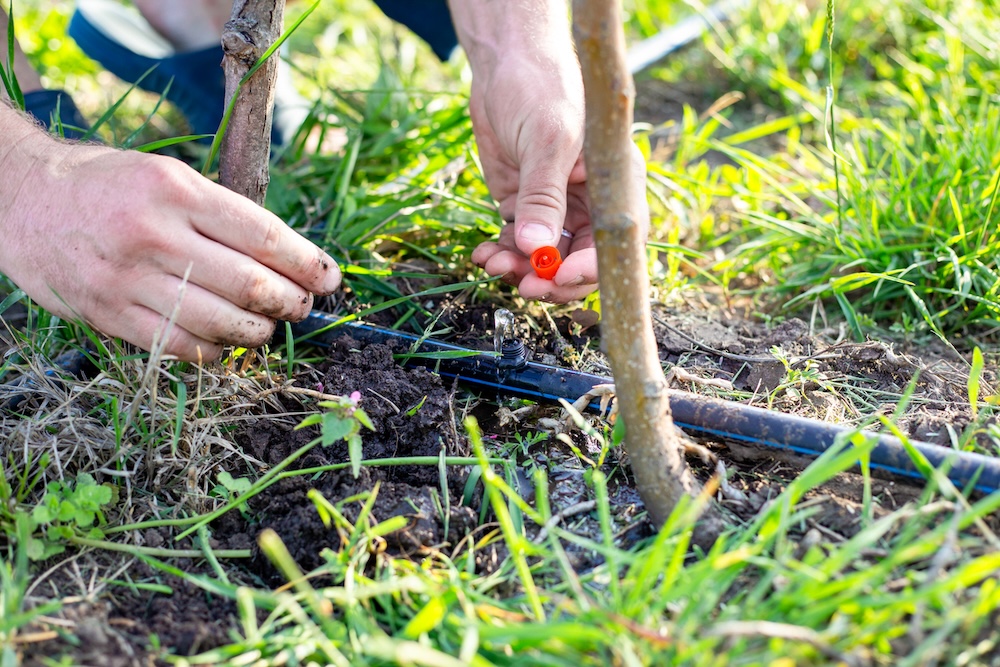
Aside from regular watering with a can or hose (which we’re sure you’re already doing if you’ve landed on a gardening blog), a drip irrigation system can be a great solution for ensuring your garden stays hydrated. These systems deliver water directly to the base of the plant where it is most needed, and limit evaporation during hot conditions. In larger gardens or high-risk areas, overhead sprinklers may also be installed to increase surface moisture during hot weather or on days of elevated fire danger. These systems can be expensive to install, but may help reduce the intensity of an ongoing fire. Water features such as ponds or small fountains are completely optional, but may help create additional safe zones to slow the spread of fire.
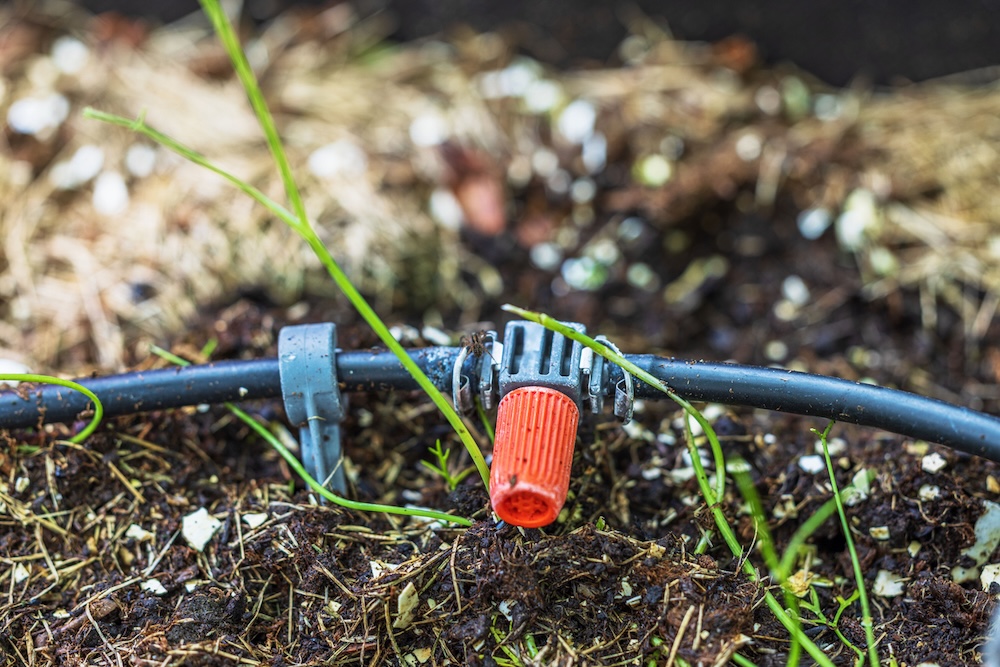
A simple drip irrigation system will keep your garden from drying out and becoming a fire hazard.
Planning a Fire-Resistant Garden with EverEdge
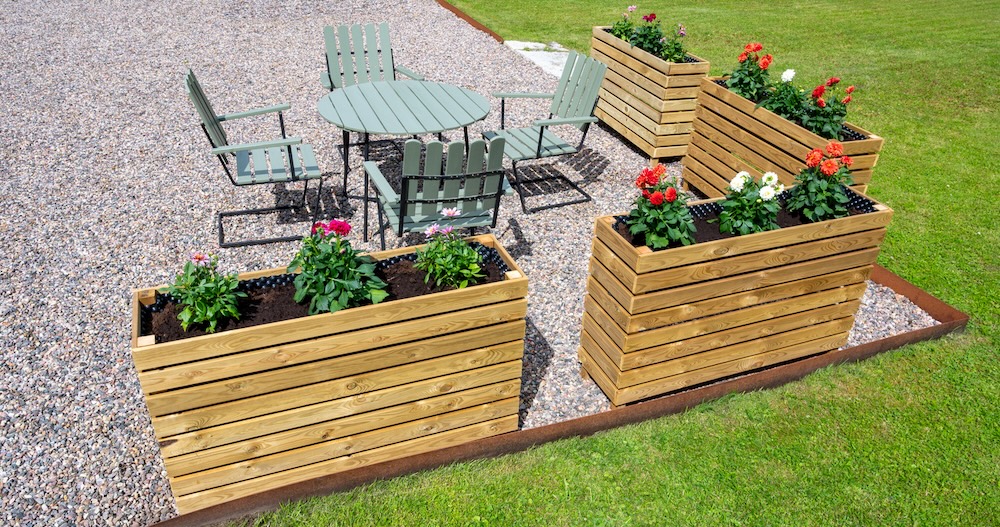
Let’s bring everything together and plan out a typical fire-resistant garden. In the immediate area around the home, we’ll start our defensible zone by laying out some pea gravel lined with EverEdge Cor-Ten, to create a small patio out the back. For a little greenery, we can add some raised garden planters, and maybe a terracotta pot or 2 with a moisture-retaining plant like Aloe Vera, away from doors and windows.
Around this inner ring, we’ll pick a slow-growing lawn variety like Zoysia, which is drought tolerant and is unlikely to become overgrown, making it an excellent choice for our fire-resistant garden. We’ll install a couple of large 900mm Garden Rings to create some garden beds for some more succulents, while the smaller 600mm rings will make great barriers for some fire-resistant trees, such as Lilly Pilly or Port Jackson figs. We can create some additional separation around these beds by continuing our gravel path towards the fenceline.
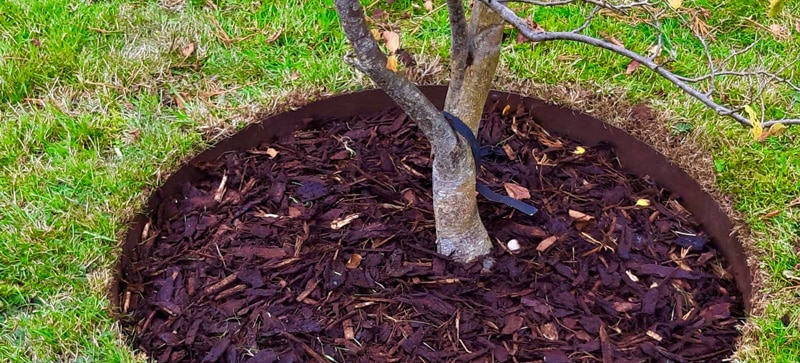
For the outer section of the yard, we’ve got room to space things out a bit more. We’ll leave a strip of lawn along the fenceline, and tuck in some low-flammability shrubs like Coastal Rosemary along the borders, using any leftover Cor-Ten to keep them organised. For trees, a Willow Myrtle will add some nice textural variety, and can be a great fire-resistant option so long as low-hanging branches and foliage are kept trimmed. Finally, let’s round things out by installing a simple drip-irrigation system throughout the garden, to keep everything well-watered.
For more information on fire-resistant gardening particularly in bushfire-prone areas, visit the CFA’s Landscaping for Bushfire guide.